
Stop Wasting Cash on Dead-End Tech: How to Choose a Canon Lens
- Danny Pavey
- Jul 1
- 4 min read

Most beginners drop all their cash on a camera body and treat the lens like an afterthought. That is a massive mistake. The glass you attach to the front of your camera dictates everything about the final image, and this becomes abundantly clear the second you start photographing.
The Setup: Working With What I've Got
I shoot with a Canon 200D Mark II. It’s a solid crop-sensor DSLR, and I’ll be working with it until I have the funds to add more lenses to my kit. But working with limited gear forces you to actually understand what your focal length is doing to your subject in real-time.

Why Focal Length Transforms Your Subject
Let’s talk about faces and focal lengths, because understanding this relationship is the secret to a beautiful portrait. The lens you choose genuinely changes the physical shape of how a person translates to a 2D image.
The Wide-Angle Effect (18mm - 24mm): If you use a wide-angle lens for a tight close-up, it introduces perspective distortion. The features closest to the lens, like the nose, appear exaggerated, while the rest of the face recedes. It's rarely a flattering look. Wide angles are much better suited for environmental portraits where you want to show the scene and context, rather than tight headshots.
The Sweet Spot (50mm): When you move up to a 50mm, things start looking much more natural. It roughly matches human vision and is a brilliant middle ground for capturing a true-to-life representation of your subject.
The Portrait Flatterer (85mm - 200mm): If you really want to flatter someone, a telephoto lens is the way to go. Shooting at these lengths compresses the facial features gently. It flattens the depth slightly, pulling the background closer and proportioning the face beautifully.
The Golden Rule of Portraits: Your focal point is everything. When shooting people, always nail the focus on the eyes. If the eyes are soft, the portrait loses its connection, regardless of how expensive your lens is.
How to Choose a Canon Lens: The Mounts Explained
If you are looking at Canon lenses, the terminology is a complete alphabet soup. A massive part of how to choose a Canon lens is simply knowing which mount actually fits your camera, otherwise you are just wasting money. Here is the honest breakdown from oldest to newest:
EF (Electronic Focus)
The History: Launched in 1987. This is the undisputed heavyweight champion of the DSLR era.
The Details: Built for full-frame DSLRs. Because Canon made them for decades, the second-hand market is currently flooded with brilliant, affordable glass.
Compatibility: Fits almost anything. You can slap an EF lens straight onto a crop-sensor DSLR like my 200D Mark II without an adapter, and they also adapt flawlessly to modern
mirrorless cameras.

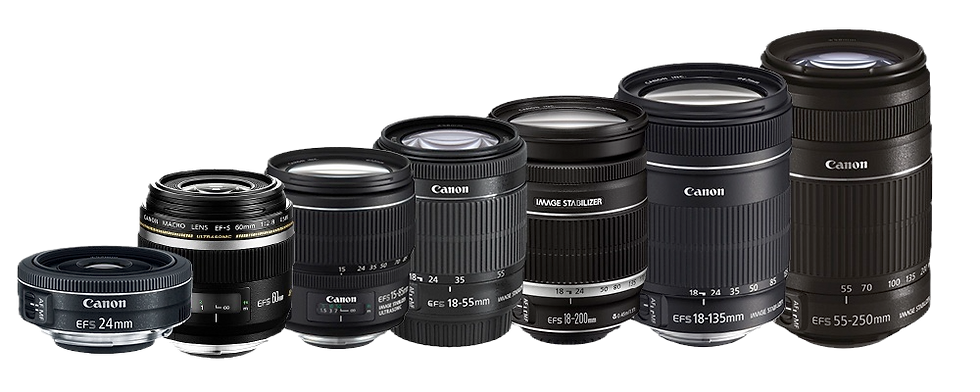
EF-S (Short Back Focus)
The History: Launched in 2003. Canon built these specifically to give crop-sensor shooters lighter, cheaper options.
The Details: This is the native mount for my 200D Mark II. They are fantastic, budget-friendly lenses for beginners.
Compatibility: Crop-sensor DSLRs only. If you try to force an EF-S lens onto a full-frame EF camera, it physically won't fit, and the camera mirror would literally smash into the back of the lens.
EF-M
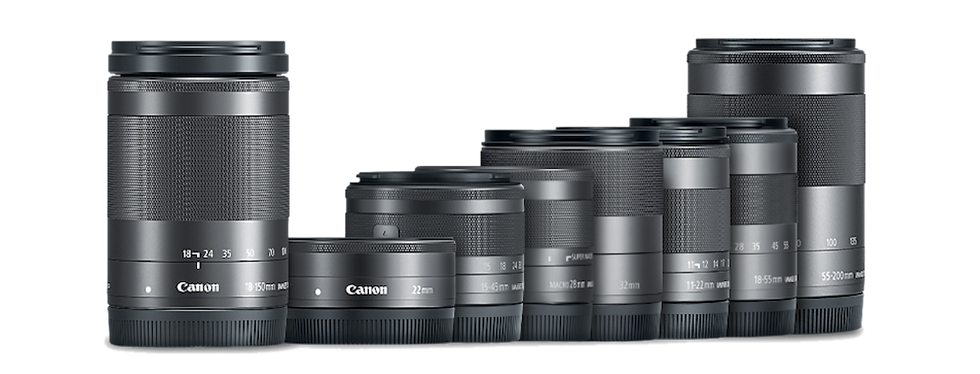
The History: Launched in 2012 for Canon's original EOS M mirrorless cameras.
The Details: I’ll be completely honest this is dead tech. Canon has entirely abandoned this system to focus on their newer mirrorless range.
Compatibility: Only fits EOS M bodies. Save your cash and absolutely avoid investing in this ecosystem.
RF
The History: Launched in 2018. Canon essentially ditched the DSLR mirror and built this mount for their new EOS R full-frame mirrorless line-up.
The Details: This is the undeniable future. The glass is incredibly sharp and the autofocus is insane, but you will pay a massive premium for it.
Compatibility: Native to EOS R series mirrorless cameras. You cannot mount older EF lenses to an RF body unless you buy a specific Canon adapter.

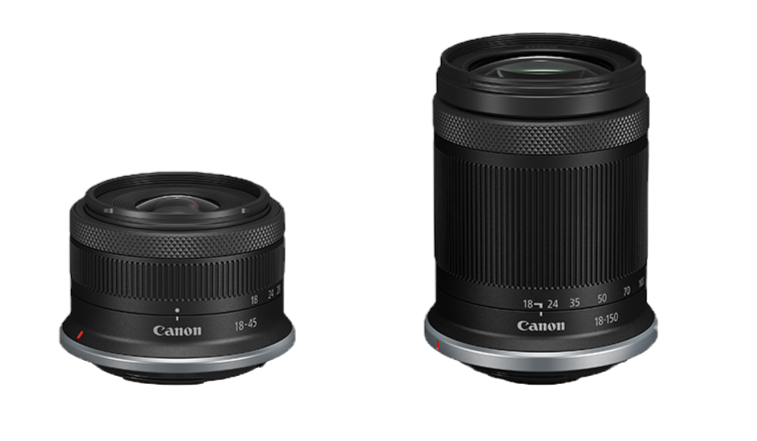
RF-S
The History: Launched in 2022. The newest addition to the lineup, built as the crop-sensor equivalent for their modern mirrorless range.
The Details: Designed specifically for smaller, more affordable mirrorless bodies like the R7 and R10.
Compatibility: Uses the exact same physical mount as the full-frame RF lenses, but optically optimised for the smaller APS-C sensor.
The Bottom Line
The gear you choose shouldn't feel like a barrier; it should be an extension of your creative vision. But before you start browsing for your next piece of glass, take a moment to actually look at the mount on your current camera body. Investing in the wrong ecosystem is a frustrating and costly mistake.
If you're shooting with an older DSLR like mine, the second-hand market for EF and EF-S glass is an absolute goldmine right now. You can pick up incredible lenses for a fraction of what they used to cost. Conversely, if you've already made the leap to a new mirrorless system, you are firmly in RF and RF-S territory, and you'll need to plan your budget accordingly.
Whatever you decide to mount on your camera, remember that the lens is ultimately just a tool to help you connect with the person in front of you. Pick a focal length that honours your subject's natural features, give them the space they need to feel comfortable, and above all else, always make sure those eyes are tack sharp.


Comments